There was a time when building a Shopify store was enough.
Pick a trending product, import it from AliExpress, install a ready-made theme, launch a few Facebook ads, and wait for orders. That model worked for one simple reason: almost nobody else was doing it.
Today, almost anyone can build a full store in a single afternoon. AI writes product descriptions, generates logos, creates product images, builds landing pages, even writes ad copy. The barrier to entry has nearly disappeared.
And that's exactly why selling has become so much harder.
The problem is no longer building a store. The problem is building a store that people trust.
Why Everyone Thinks They Have a Traffic Problem — When They Actually Have a Trust Problem
Most store owners are convinced they don't have enough visitors. So they spend weeks swapping products, testing new audiences, or simply increasing their ad budget.
In reality, a huge share of visitors make their decision within the first few seconds on the site. Not because they carefully analyze your brand, pricing, or shipping terms — but because they recognize a pattern.
Over the past decade, people have seen thousands of low-quality dropshipping stores. Without even realizing it, they've learned what those stores look like. When they spot the same visual signals again, their brain instantly concludes "this isn't trustworthy" — and that happens almost immediately, before the visitor has even read the product description.
Shoppers Don't Analyze a Site — They Scan It for a Feeling
Rarely does a visitor consciously think: "The typography here is inconsistent" or "That looks like a stock photo."
Instead, they think something much simpler: "This feels like just another sketchy store."
That feeling doesn't come from one big problem. It comes from a pile of small signals that add up together:
- generic hero sections that look like a thousand other homepages
- product photos lifted straight from the supplier
- product descriptions that "smell" like AI-generated text
- countdown timers manufacturing fake urgency ("Offer ends in 9 minutes!")
- generic trust badges with no real context behind them
- exclusively perfect five-star reviews, without a single critical one
- no name or face of a founder anywhere
- no real contact details, just a contact form
- pages that load slowly
- aggressive popups the moment you land on the site
- inconsistent branding — a different font, different colors, a different tone on every page
None of these elements alone kills a store. But stacked together, they create what many shoppers today recognize as the "dropshipping vibe" — and that's when they close the tab before ever reaching the buy button.
AI Solved One Problem and Created Another
Artificial intelligence has drastically lowered the barrier to building a store. But that's exactly why the internet is now flooded with stores that all look nearly identical.
The competitive advantage is no longer speed of setup. It's differentiation from everyone else.
Stores that rely entirely on AI-generated content often sound the same. Headlines like:
- Premium Quality
- Revolutionary Design
- Transform Your Life
- Experience the Future
show up everywhere, on dozens of unrelated sites. Shoppers now recognize AI-written copy almost as quickly as they recognize a stock photo — and it erodes trust just as fast.
The Product Page Became the New Homepage
A few years ago, most visitors landed on the homepage first, then browsed their way to a product.
Today they arrive directly on a product page, from:
- Meta ads
- TikTok
- Google Shopping
- influencer content
That means the product page now has to do the job the entire website used to do. It has just a few seconds to answer five questions:
- What exactly is this?
- Why should I care?
- Why should I trust you specifically?
- When will it arrive?
- What happens if I don't like it once it does?
If the answer to any of these is unclear — or missing entirely — the visitor leaves, and usually doesn't come back.
Conversion Doesn't Start With a Better Button
Many store owners try to fix conversion by changing the color of the "Buy Now" button, adding one more countdown timer, or installing another "urgency" app.
In practice, this often makes things worse, because it adds pressure instead of solving the actual problem.
The stores converting best today focus on removing friction, not adding pressure. They choose:
- clarity over cleverness
- authenticity over manufactured urgency
- simplicity over clutter
- genuine reassurance over manipulation
The Rise of the "Branded" Dropshipping Store
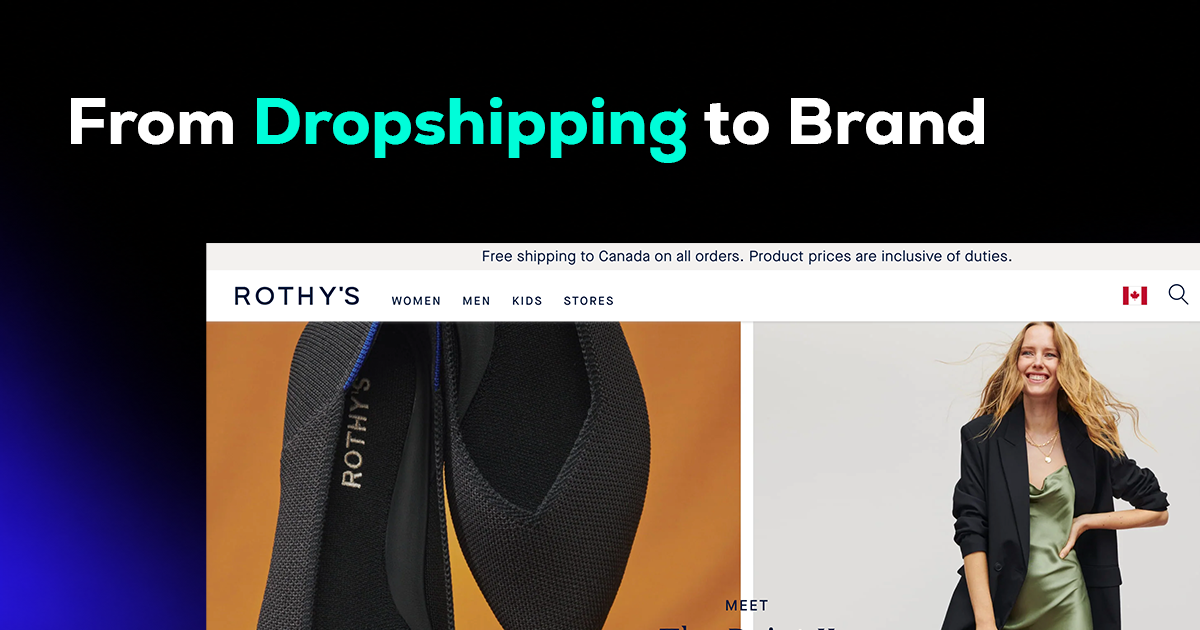
Probably the biggest shift in ecommerce in recent years is this: dropshipping is no longer a business model. It's just a fulfillment method — nothing more than how the product physically reaches the customer.
The stores getting results today increasingly look like real brands, not resellers. They focus on:
- one clearly defined niche
- one clearly defined audience
- one clear value proposition — why this product, why now
- consistent visual and written communication
- original photography, not images pulled from the internet
- a real story about who's behind the brand
- transparent shipping policies
- genuine reviews from real customers
Customers no longer buy from an anonymous website. They buy from something they believe is a real brand, with real people behind it.
The Five Layers of a High-Converting Store
1. Trust
Before you even ask someone to pull out their card, you need to build a baseline of trust:
- a professional, owned domain (not a generic free subdomain)
- a founder story — who you are, why you started this brand
- clear contact details, not just a contact form
- clear, easy-to-find policies (shipping, returns, refunds)
- real reviews, including ones with less than five stars
- transparency about delivery timelines
2. Brand Identity
Every visual element needs to feel like part of the same story:
- a consistent color palette across the whole site
- consistent typography, not five different fonts
- original photography instead of stock or supplier images
- a unified icon style
- a clear visual hierarchy — the eye knows exactly where to look first
3. Product Experience
Shift the focus from listing features to solving the customer's problem. Explain:
- why this product exists in the first place
- who it's actually for
- how it concretely improves everyday life
- what makes it different from similar products on the market
Back all of that up with real lifestyle photography (not just the product on a white background), video, an FAQ section, and proof from real customers.
4. Performance
Site speed is part of the user experience, not a technical afterthought:
- keep the number of installed apps to a minimum
- optimize image sizes
- cut unnecessary JavaScript
- use a lightweight, fast Shopify theme
5. Mobile Experience
Most customers will never see the desktop version of your store — it all happens on a phone:
- large tap targets that are easy to hit with a thumb
- readable typography without needing to zoom
- a sticky Add to Cart button
- fast express checkout
- simple, uncluttered navigation
The Future of Shopify Design
The biggest opportunity today isn't building prettier stores. Prettiness is easy to copy, and AI can generate it just as easily as anyone else.
The real opportunity is building stores that feel believable.
As AI keeps making it easier to spin up a store, trust becomes the one thing that's genuinely hard to automate. The stores that win won't necessarily have the best product on the market — they'll be the ones that give a visitor enough confidence to click "Buy."
Check Your Own Store
We put together a detailed checklist covering every point in this article — from branding, to the product page, to performance and mobile experience — so you can quickly see where your store stands.
You can view the full checklist here: [CHECKLIST]
Before you launch your store, ask yourself one simple question:
"If I'd never seen this website before, would I believe this is a real brand — or would it look like just another dropshipping store?"
The answer to that question will probably impact your conversion rate more than any marketing campaign you'll ever run.